
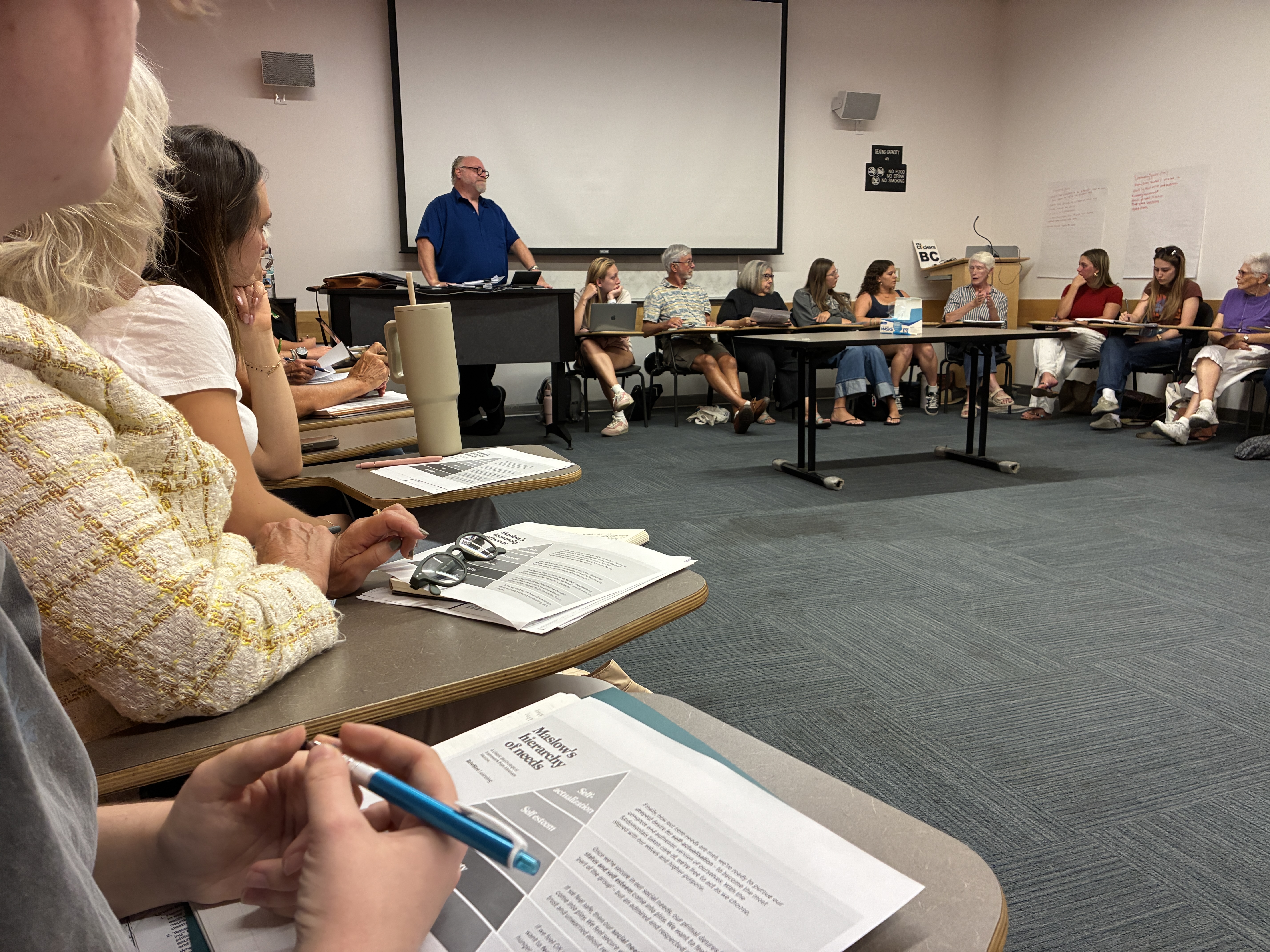
 I joined an intergenerational writing class on the University of Colorado campus. The 20 students are young enough to be my grandchildren. The 20 community members, 50 years and older, pair up with the students.
The 40 of us, led by Professor Eric Klinger, bring our generational experiences, stories, mistakes, opinions, and, hopefully, a few useful things to say.
In 1966, one of my early mentors and neighbor, Sam Contos, helped me get my first job as a busboy at the Hitching Post Inn in Cheyenne. State Legislators knew the Hitch as the informal Capitol Building. Arsonists torched the place 15 years ago on September 15th.
Sam knew the general manager, who also influenced me a lot. I later became a lobbyist and could find my way around.
The boys liked Mr. Contos because he’d come back from National Guard meetings wearing his colonel uniform. My friends and I dressed up as soldiers and played army war games during the Vietnam era. We gathered to watch Combat!, a TV show about Americans in France fighting the Nazis.
 Big Sam took a liking to me, maybe because I didn’t tease his son, John, several years younger than me. Everyone has been a mentor or mentee.
Those roles change over time. I last ran into John at a wedding in Encampment, Wyoming. He’s successful and is as tall as his dad.
For those two summers as a young teenager, I worked alongside adults who didn’t belong to my family, my school, or my neighborhood. I learned about jerks at an early age from restaurant customers demanding more coffee.
I worked in the hotel’s big Coach Rooms, where weddings, convention banquets, and high school class reunions filled the calendar. The class reunions interested me. I watched people stroll through the doors and thought they looked really old.
 They probably had just turned 28 or 33, depending on whether it was a 10-year or five-year reunion.
The women wore dresses, hose, high heels, makeup, jewelry, and carefully coiffed hair. The men wore argyle socks, wingtip tie shoes, sport coats, and those skinny ties in style during the 1960s. To my young eyes, the scene looked like how the AMC TV series Mad Men portrayed young adults.
I carried their dirty plates while these mysterious grown-ups, sipping gin and tonic, celebrated friendships that had lasted for years.
*******
Back when I was 13, I looked at adults from the outside. I assumed they had finished growing up. They had jobs, families, matching clothes, and answers.
Now I know better.
We don’t stop writing our life stories. We keep adding chapters.
That idea sits at the heart of the class. We oldsters don’t teach the students anything. Students aren’t in the class to absorb whatever the older folks have to say. We learn from each other.
 One of our readings describes three stages of intergenerational programs. First, one generation teaches while the other learns. Then both generations learn together. Finally, the generations work together to solve problems.
I bring experience, but experience doesn’t automatically translate into wisdom. I know stuff because I’ve lived for going on eight decades. My match, Raymond, and I have shared the last 20 years, but I have no clue about his world and two-decades of experiences.
When I ventured out into the world, conversations revolved around diseases, obstetrics, and diapers. Now on Medicare, we talk about diseases, geriatrics, and diapers.
The class is a graduation requirement. The upperclass students come from multiple disciplines, from archaeology to speech pathology. A student can relate an experience and outlook on life that I’ve accepted for decades and make me pause and reexamine my assumptions. I can provide context for topics that feel completely new to them.
Students live in a fast-paced world influenced by technological advances and cultural references that didn’t exist when I was clearing tables at the Hitching Post. I grew up in a world that current students can only encounter by reading history books, watching old TV shows, and hearing stories from their grandparents.
Writing gives us a place to meet, though the class is less writing and more storytelling, with some writing. As Ann Lamott says, our assignments are “shitty first drafts.”
That’s the value of putting generations together, sitting at desks arranged in a circle. We exchange information and challenge assumptions.
 It’s only been a month, but I enjoy it. I like walking around University Hill, hearing random conversations about classes and social life, and having multiple boba tea options.
I haven’t been in an academic environment since 2004, when I was a nontraditional student at the CU-Denver graduate school, surrounded by undergrads heading toward their next stops.
Younger people at the beginning of their adult lives energize me, considering the road I traveled and am still traveling.
When I was 13, I thought the alums attending those reunions had the good life and had reached the end of the road.
Now I understand that they had barely started walking to the car.
Here I am, six decades later, still getting started myself.
The difference?
I no longer carry the dirty dishes.
I bring the stories about the dirty dishes.